


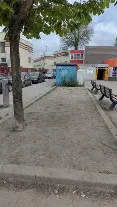
Partij voor de Dieren Rotterdam has submitted written questions about the poor quality of the maintenance of the green spaces in Hillesluis. Summer is often the period when the city beautifully blooms, because plants, trees, and flowers are in bloom. The municipality is committed to making this possible in more and more places.
As a result, our city is becoming greener, allowing more water to seep into the ground, the air to become a bit cleaner, the streetscape to improve, and it is good for the nature in our city. Our residents can be happy about this. Besides being good for people, nature-inclusive green spaces are also important for biodiversity in the city.
The Party for the Animals increasingly sees that green beds laid out by the municipality are poorly managed and maintained, the planting is dead or trampled. Some green beds lack protection against trampling because there is no fence around them. They also see that, with the current drought, the plants are struggling and look withered. Residents of neighborhoods who see neglected green beds are not pleased with this. Empty green beds add nothing to the biodiversity in the city. Furthermore, it appears that some neighborhoods seem to be better cared for than others.
Therefore, the party has asked the following questions.
1. Is the college aware that the quality of bio-diverse green space (planting, management & maintenance) is not of the same quality in different neighborhoods within the municipality? If so, why are there differences in quality and which quality standards are applied per neighborhood?
2. Is the college aware that the Hillesluis neighborhood council has repeatedly tried to improve the quality of green in the neighborhood via the municipality but has not been heard? (See photos) If so, why is the green provision in Hillesluis still not in order? If not, why does this feeling prevail among the relevant neighborhood council?
3. Does the college agree that a low or high fence around the green bed protects the planted greenery from being trampled? If so, why is this not installed where needed?
4. Is the college aware that during the current drought, green spaces need to be watered more often? If so, why is this not done equally thoroughly everywhere?
5. Does the college agree with the Party for the Animals that neglected green spaces have a negative effect on the living and residential environment of people and animals?
6. Are there concrete plans within the college to map out where the quality of green spaces is poor? If so, when can this overview of dead and neglected green beds be expected?
7. How does the college monitor the state of the green beds in neighborhoods such as Hillesluis? Why has this monitoring not led to timely action at locations where the quality of the greenery is below par?
8. Are there concrete plans within the college to improve and manage green spaces/beds such as those in photos 1, 2, 3 & 5, qualitatively and in a nature-inclusive way? If so, when is this scheduled? If not, why not?
Submitted by Sam van Leeuwen